The Following post is from Vienda Maria’s blog page:
“How do you do it?” is probably one of the questions I get asked the most. The short answer is:
I believe in myself and my dreams. I decide what it is that I want, how I want life to feel and look like, and then I move in the direction of that vision. I’m actually not really sure of the HOW until I see it in retrospect.
But when I DO see it, it looks a little bit like this:

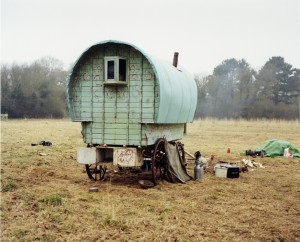
How To Be A Modern Day Gypsy: Part 1. Follow Your Heart
Like all good stories, my story on how I became a modern-day gypsy, starts with unusual beginnings!
I have been a gypsy since the day I was born. My parents, an Italian pirate/gypsy/hippy and an Austrian country girl, met at a party in Salzburg one day, had a wild love affair and traversed the mountains, valleys, lakes and seas of Europe from that day forth. I decided I wanted in on the fun, and joined them on their adventures a year later….”
I have been a gypsy since the day I was born. My parents, an Italian pirate/gypsy/hippy and an Austrian country girl, met at a party in Salzburg one day, had a wild love affair and traversed the mountains, valleys, lakes and seas of Europe from that day forth. I decided I wanted in on the fun, and joined them on their adventures a year later.
Though their love affair didn’t last beyond my fourth year of life, the universe had already set my destiny in motion. I was to become a modern-day gypsy. By the time I was 15 I had travelled and lived throughout many parts of Europe such as Austria, Italy, Spain including the Canary Islands, Portugal as well as Singapore, Australia and Fiji.
I spent large parts of my childhood exploring the Australian native wild forests and beaches and dreaming of places yet for me to discover and when I was 15, with much begging, admonishing and cajoling convinced my mother that I was being called to lands far, far away.
Thus was the turning point and I began my first journey alone, where I lived in the United States as an exchange student discovering what treasures the world held for me, from the worn-out glamour of Hollywood and the Mormons of Utah, to the indigenous American Indian communities of New Mexico and the thick accents and hospitable humor of Texas. Since then, gypsy travels became my lifestyle. I went back to Australia for a year to see my mother and with age 17 completed my high school certificate in one year through a distance education course so I could finally be free of the schooling system and also have the option for further study.
At 18 I moved to Salzburg, Florence and then London over a three-year period, and then at 20 heard a calling to go to university and moved to Cairns, Australia via a month in Thailand to complete a degree in Psychology, and where I started working as an event organiser/ artist manager for music and arts festivals. This work then took me around the world for the next four years: Australia, Turkey, Morocco, Spain, Switzerland, Portugal, France, Italy, England and the United Arab Emirates.
I was growing up and at 27 realised I needed to take time out and redefine the direction I wanted to take in my life. Working in festivals was growing tiring and I wanted more freedom to express myself and my talents and passions. I took a year to myself and travelled through India, Japan, Thailand and Laos during which time I immersed myself in my secret passion: writing! I also rediscovered my love for helping people overcome their own obstacles in life and started developing my career as a life coach.
In 2010 I moved to Sydney, where I based myself for two and a half years whilst I worked full-time running a small business for a corporate motivational speaker and building my own business from the ground up.
Since July 2012 I have been on the road again, first 5 months in Europe writing, coaching and doing workshops whilst traveling through Portugal, via Amsterdam for three months, Prague, Leipzig, Manchester, followed by 3 months in Central America moving from Mexico through to Belize, Guatemala, Honduras, Nicaragua and Costa Rica and now, finally settling in San Francisco for some time. I plan to stay in the Americas for the next year or two. But as always with gypsy travels, you never know when and where the north wind will blow me next!
The question I get asked the most from people is, now do you do it? This very simple question usually comes loaded with much more detail: how do you do it financially?, what do you do for work?, how do you make the decision to leave? and how do you know where to go next?.

How to Be A Modern Day Gypsy: Part 2. Count Your Pennies
How much money you have is generally less important than what you do with that money.
Travels can last much longer if you use your money is thoughtful and clever ways, and you think outside of the box. Here are 7 of the most poignant tips on how to make your money last on the road.
1. Be Flexible.
Being flexible is probably the NO. 1. tip I can give anyone who wants to become a traveller. That means be flexible with your plans, with where you want to go, with whom you will meet and what you will do. Leave it up to the travel gods. They will always guide you to have the best experience possible! For example, late last year I had to make a decision. I had been in the UK for a month, doing some work, and had to decide whether to stay for the winter or move on. London is an expensive city if you don’t have a conventional lifestyle, and though I could have stayed and worked my heart was yearning to go somewhere warmer. Both India and Mexico were calling my name. So I started researching flights and my decision was made for me. I found a $250 flight from London to Cancun as opposed to the cheapest flight to Mumbai in India which was $800. I saved $550 simply because I was flexible, and have been having the most incredible time in Central America ever since. This is true for so very many different scenarios. It’s so important to remain open and flexible at all times when you’re a modern-day gypsy, as you never know when and what kind of opportunities will appear.
2. Don’t Make Solid Plans.
This may seem counterintuitive for many people who haven’t had a lot of experience travelling, but actually making solid, fixed plans such as hotel bookings, trips and tours may be your demise because you often can’t change them if something better shows up. In many parts of the less-developed world, you won’t get the best deals and experiences by booking them online. You get them by talking to the local people, making friends and connecting in “real” life. Only a couple of weeks ago I was working at a music festival in Costa Rica, in Uvita called Envision. They had camping spaces available for staff but I wanted more comfort (I may be a modern-day gypsy but I definitely enjoy and indulge in simple creature comforts!). So a friend and I went to a local cafe and started speaking with the waiter, the owner and some other locals. Luckily my Spanish is fluent enough to make these kinds of conversations and within minutes the news was out that we were looking for a place for two people with kitchen facilities. The next day we were taken to a beautiful row local tourist apartments, each complete with private kitchen and bathroom, a fabulous swimming pool, hammocks and a lovely outdoor area and a 5 minute ride to the festival site. We wouldn’t have found this if we hadn’t gotten in with the locals and we praised and felt gratitude for our lovely temporary home every day.
3. Always Barter the Price.
This is really important. Always, always, always ask for a better price. You won’t always get it but more than often than not you will. I do this every where I go, because I know that my sale is valuable to the seller and that if you don’t ask, you don’t get. Not only did we find a beautiful place to stay in, in the tip above. But we also got a really good price because we asked for it. When we initially spoke to the locals about finding an apartment to rent during our stay in Uvita, we told them that we were planning to stay for 15 nights and that our budget was $20 per night for the two of us, so $10 each. We knew that the prices in the area were mostly above and beyond this unless we wanted to stay in some dodgy backpackers but we both know from experience that you generally always get what you put out to the universe. It’s just how modern-day gypsies roll! Because we were staying for more than two weeks, and it meant that the owner of the Cabinas had a definite income for that entire time, and we paid in cash, he was happy to fulfill our needs. The apartment we received was normally priced at $60 per night so we actually saved $600, which is HUGE in the grand scheme of things.
4. Be Generous.
This tip is based on the law of attraction. What you give out you get back, and when you’re on the road there’s nothing more beautiful and fulfilling than giving something to someone who is in need. Not only does it feel great, but it also has the added benefit of your generosity being reciprocated in the most unexpected ways. This may not happen directly from the people you have been generous with, but you simply never know. The amount of times that wonderful things have happened to me is countless: complete strangers offering me a place to stay, free taxi rides to airports when I ran out of local currency, a shared meal with people living below the poverty line, generous gifts of books or other things that I’ve needed along the road. Being generous is a wonderful attribute to take with you wherever you go, and although this act should come from a pure place without any expectation, you will find that when it is reciprocated, it will often save you money in the most unusual ways.
5. No Bills.
One of the wonderful benefits of being a modern-day gypsy is that I have no bills. I don’t own property, I don’t have any ties, I don’t have telephone, electric or gas bills. I pay for the things that I need as I go. Certainly this makes the way I care for and spend my money quite different. I’m very aware of what my expenditures are and deal with money on a day-to-day basis.
6. Stay With Friends.
After having travelled for such a long time, and having made lots of friends wherever I go, I have the wonderful opportunity to stay with friends in many places along the way. I am always so incredibly grateful for every single individual who is kind enough to open their doors to me and share their home. I always make an effort to reciprocate their kindness and hospitality but putting my home making talents to work and making some beautiful meals and leaving some kind of light, love and inspiration behind wherever I go. This obviously also means that I get to save on accommodation expenses which is definitely one of the biggest costs when travelling.
7. Travel Slow.
I like to take my time wherever I go. I’m not a tourist or a backpacker, I’m a modern-day gypsy which means that I want to immerse myself in the place and culture that I am visiting. This means that I like to stay in one place for longer periods of time rather than move around quickly. And this can really help make your money last longer. When you live like a local, you pay local prices and you get to know the people. You can rent a place for longer periods of time at the fragment of the price of a hotel or other tourist accommodation, you learn to shop where the locals shop, prepare your own meals and love and more simple life. Taking your time when you travel is not only good for your pockets, but also much mor fulfilling for your soul, as you get to really experience the place that you are visiting rather than just pass through it.
Life as a modern-day gypsy has so many adventures, twists and turns, and how you use your money is definitely one of the important aspects that you are faced on a daily basis.

How to Be A Modern Day Gypsy: Part 3. Giver of Gifts
Generosity is a high priority in the life of a gypsy because the more you give, the more you receive and gypsy life is incredibly co-dependent on human connection and the kindness of others.
As a gypsy I bring a fresh breath of air and an indispensable calm into the life every single person I come in contact with, as well as provide a wealth of spiritual and emotional support. This is often is reciprocated in numerous different ways, and whatever I receive is usually exactly what I need in that moment.
One of the wonderful things about having the freedom of being a gypsy is that you can work anywhere and everywhere you go. I personally tend to have wide range of income streams and one of my main jobs is to find a way to share and give my gifts wherever I go. I’m constantly marketing and connecting with people in order to keep the energy and money in my life flowing through.
Generosity is a high priority in the life of a gypsy because the more you give, the more you receive and gypsy life is incredibly co-dependent on human connection and the kindness of others. As a gypsy I bring a fresh breath of air and an indispensable calm into the life every single person I come in contact with, as well as provide a wealth of spiritual and emotional support. This is often is reciprocated in numerous different ways, and whatever I receive is usually exactly what I need in that moment.
Nonetheless, many of the energy transactions that I engage in are also monetary, which is important because money is a fantastic way to exchange your time and efforts for the things you need. Some of the ways that I work and in essence give my gifts are:
I’m a mentor. I help women become empowered by teaching them to love themselves; to trust themselves and their intuitions and to live their lives on their own terms. It’s all about getting real with yourself, your love, truth and freedom. I encourage women to take courage and live the life they dream of, and I do so by being a leading example of what I believe in. Everyone’s path is different, and it’s important to get clear on what yours is and also be gentle and kind with yourself as this path is constantly changing.
I’m a writer. I do various types of writing which includes blogging for my site viendamaria.com, copywriting for creative businesses, and writing digital guides such as the Build Your Own Business Blog guide which you can buy here (Nadine, perhaps you want to place your affiliate link in there somewhere!).
I give workshops. I am often hired to give workshops to women who are in need of more love, support and empowerment in their lives and guide them on how to nurture themselves and their lives, how to listen to their intuitions and really connect to the spiritual part of themselves in order to live joyful, fulfilled and empowered lives. I really adore speaking to small groups of women and shining my light into their hearts so they can see just how incredibly amazing they are. I love extracting people’s potential for them to see in clear view. It’s such a beautiful thing when someone recognises just how much they are capable of and that they hold the power to do anything they dare to dream in their own hands. Such joy!
I do events and gigs. From time to time, depending on my situation or my fascination, I work at music festivals, coordinating some specific aspect of the event or pick up other short-term and contract gigs which range from small business support, social media, marketing and coordinating. When you’re travelling a lot, it’s financially important to be flexible and open to do different things as they come up. I’m also a massive fan of variety and love doing lots of different things.
I can’t multitask and live a very simple life, but at the same time am conjured into constant adventure. It is the thrill of living a life full of deep and meaningful sensual experiences and the human connections, that lights me up and drives me to keep giving all that I have and seeing what comes back. As a modern-day gypsy, having many different income streams is the only way to keep moving, otherwise you get tied to one space and easily fall into tracks that give you very little flexibility and can limit the chances and opportunities that are available to you.

How to Be A Modern Day Gypsy: Part 4. Listen to the Wind
Being a gypsy is very much feeling orientated.
When people ask me how I decide when it’s time to go, I like to say that I know because the north wind blows and I am compelled to listen and adhere, but this wind that I speak of is more of an internal sensation and push to move than the actual wind that’s blowing outside. It’s a feeling within me that’s akin to the wind….”
One question that I am asked so often is, how do I know when it’s time to leave a place. How do I make the decision to go? I love this question because it is directly connected to me listening to my intuition. I make all of my decisions based on my connection to Soul (you can find out more about how I connect to Soul in this video) and how I FEEL. Being a gypsy is very much feeling orientated. When people ask me how I decide when it’s time to go, I like to say that I know because the north wind blows and I am compelled to listen and adhere, but this wind that I speak of is more of an internal sensation and push to move than the actual wind that’s blowing outside. It’s a feeling within me that’s akin to the wind.
In my life, I don’t make set plans, rather, I create commitments for myself that I choose to fulfil and complete in the space that I am in at that time, and then wait to find out what is to happen next. This gives my life a lot of space and flexibility to co-create what it might entail with the powers that are greater than I. Either, Life will give me reason to stay in one place, or it will send me in a new direction. It is easy to set yourself up in one place in life and to get really comfortable, but if that sense of security and comfort is stunting your personal growth then it’s diminished your possibilities rather than expanding them.
You don’t have to leave the place you live in order to travel. So long as you are able to see your world with fresh and new eyes every single day, and be open to new experiences and the wonderment of life, then you are a gypsy in your own way. As long as you don’t allow your life to become stagnant, as long as you remain curious, connected and enlivened you can listen to the wind and let it guide you to undiscovered corners of your heart, soul, city or village.
For me, I am compelled to grow, blossom and expand by wandering across the soils of this gorgeous planet. I am just made that way. And I know when it’s time to leave because I feel it.
Generally, what I discern is a sense of discomfort, that things aren’t quite right anymore. The flow of life has ceased to move in any particular direction, the colours that were once bright and shining appear misty, my body grows in discontent and I can sense it’s time to move again soon. My body is actually a fantastic signal, it ALWAYS tells me where I’m at with pretty much everything. If my body is unsettled, I always ask it what the root cause of this sensation is, and once I’ve ruled out any other options I recognise that it’s simply telling me that it hears the north wind calling it to move on.
At this point is where I make sure I deeply connect with my Soul and intuition or inner guide and commune with it in order to gain a sense of direction. I’ll meditate and ask if I am being called to lands unexplored and what insight I can be given to make my decision clear. Again, this all occurs within a FEELING field. If the idea of moving feels sweet, gentle, blissful and full of grace and ease, then I know that the winds have spoken. If the idea of moving onto new destinations gives me an uncomfortable grating sensation, a field of resistance of some sort, then I know that there is something else going on and it’s best for me to stay and be still where I am right now.
Once I have recognised that the time has come to follow my dancing gypsy feet again, then I need to get clear on which direction I’m heading. I cannot read the future or tell you exactly what’s going to happen next but I can feel what direction my intuition is guiding me towards and often I also receive intuitive thoughts or images about what’s going on around me that affects the decisions that I am making. I’ll tell you more about that next time!

How to Be A Modern Day Gypsy: Part 5. Choose Your Destination
More often than not, the next destination has already been imprinted into my heart and my heart yearns to go there.
Where to next? That is the question that every modern-day gypsy asks whenever the north wind blows. Where in the world will this journey take me next? Who will I meet? What will happen? How is this going to roll out?
In the previous post, on listening to your intuition and when the wind blows, I discussed how I know when it’s time to go. But once I know that I’ve been called to keep moving, it’s really good to know what direction to start moving. For me, there are four main ways that I recognise my direction, and they tend to generally occur simultaneously, once I have made my decision to move.
1. My Heart Yearns
More often than not, the next destination has already been imprinted into my heart and my heart yearns to go there. This feels kind of like being in love with someone and missing them dearly, but instead of having that feeling for a person, you have that feeling for a place which, more than likely, you’ve never been to before. I don’t wildly choose to just go anywhere though. I always choose to go to places that are in harmony and flow with where I’m at right now. I don’t like to travel too far or too fast, and try to remain in the same country or continent as long as possible, until I am satisfied that I have completed all the things that I am to do, in that specific, geographical area. Sudden, fast movements into obscure, far away directions aren’t good for either body nor soul.
2. My Soul Directs
This is where I go back to my feeling practise which I illustrated in How To Be A Modern Day Gypsy: Listen to the Wind. When I sit and connect with my intuition and Soul, I can feel which way it is swaying towards. The name of a town, city or country will pop into my mind and imagination and I am filled with a sense of joy, warmth and ease at the prospect of going there. This step of discerning where to go is really fun, some and easy. It can however be obscured if you have other worries, fears or concerns around moving forward, which often have nothing to do with your next destination and everything to do with some deeper blockages that you need to take a look at and process. Sometimes I just write a quick love note to the Universe with something like: “Dear Universe/Life/Source, where do you wish me to go next? Where am I most useful and can I give the best of me? In love and gratitude, Vienda.” And then I wait and see what happens. And always, always, always I receive an answer in some way or another. Sometimes from a phone call or an email. Sometimes I just have an inspired idea. It varies, but the point is to listen!
3. The Place Calls
I love it when a place calls my name so loudly and clearly! It makes itself heard and apparent by showing up serendipitously through people talking about this particular place, reading the name in books, overhearing about it in conversations or films, and generally being bombarded by the calling of a place in various and frequent ways. It wants you and is making itself heard by appearing to you over and over and over again.
4. People Connect
Finally, this is always the clincher for me. I know that I am meant to go somewhere when there are people asking me to come. I remember about 6 months ago I was in Germany, and I knew that it was time for me to move on but I simply had no idea where to. So I went through the process described above and within two days I received 20 emails from friends asking me to come to London. And so, clearly, that’s where I went. I hadn’t asked any of them to direct me. I asked only my intuition to guide me. But this just shows how connected we all are. Again, more recently, I had to decide what to do after the event in Costa Rica that I worked at finished, and although I had options and opportunities in Mexico and Los Angeles; San Francisco called the most strongly to me. The people who I have connected with in this area were most compelling and here I am.
Choosing where to go is made so much easier when you know you have a friendly, sweet and smiling face greeting you at your destination and I am always overwhelmed by the kindness and generosity that has been extended to me and can only give back all of me in return as I live the modern-day gypsy life. But it is important to ensure that your decision isn’t based only on one of the tools outlined in knowing where to go, but equally balanced across all four to ensure that you are covering all your bases and your decision is harmonious and in line with your highest good.
Photos: FreePeople.com